

There is a quiet truth about working with art collections that few people talk about.
Sometimes the most meaningful act is not acquiring art.
Sometimes it is letting it go.
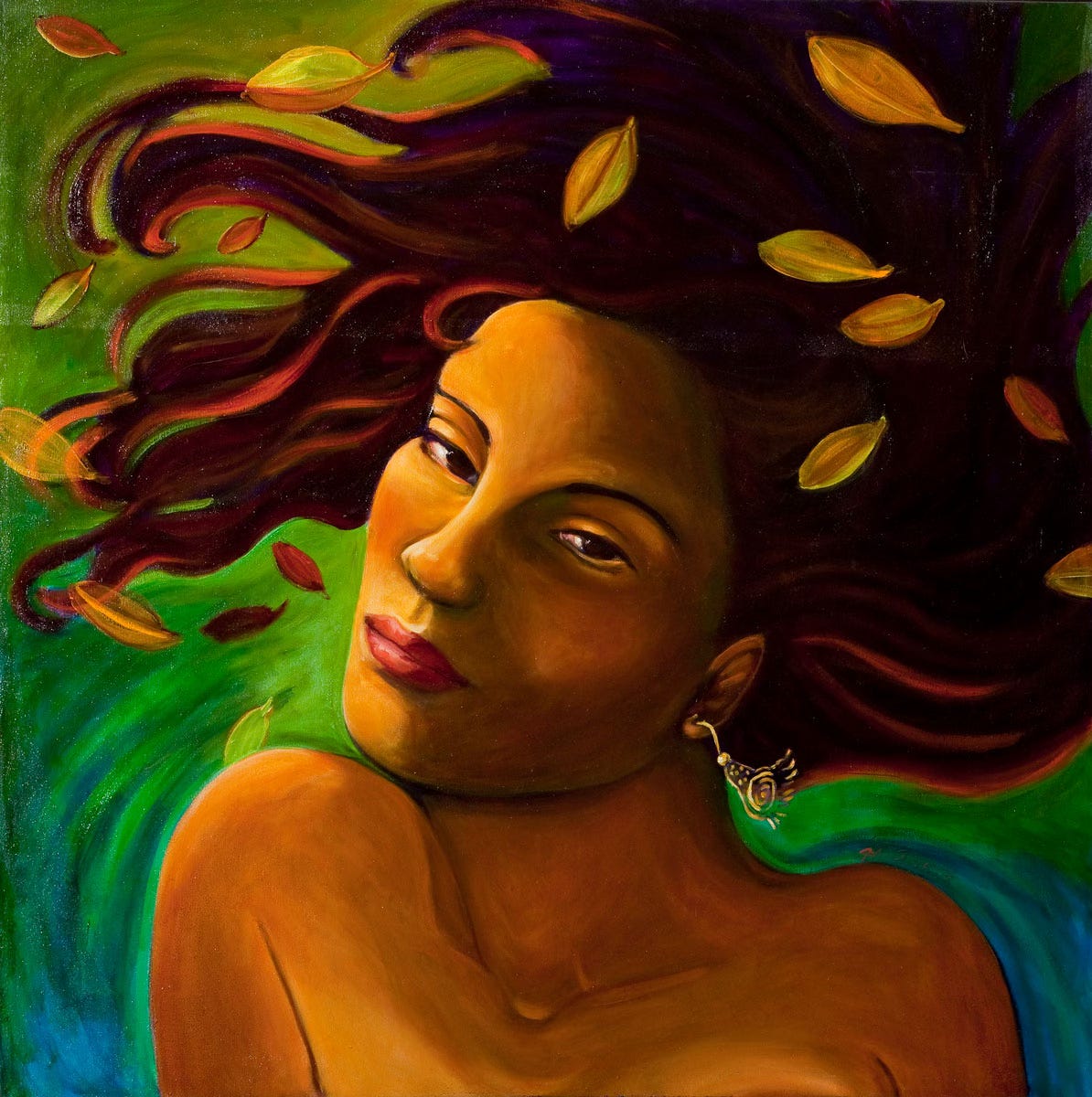
Years ago, I gave a painting by artist Margaret Garcia to Cheech Marin.
Not because I didn’t love it — I did. It was the very first major art purchase I had ever made. Its title, Aire Libre, and imagery of a woman finally breaking free deeply resonated with me, and I loved it.
Not as a transaction.
Not as a formal gift to an institution.
But as a gesture of stewardship.
At the time, I had already spent years working alongside Cheech as his Chicano art collection grew into something far larger than any of us ever imagined. What began as his personal passion had evolved into a cultural force; one that would eventually help reshape how Chicano art is seen within American museums.
The painting I gave him belonged in that ecosystem.
Margaret’s work carries the emotional and spiritual complexity that defines so much of Chicana artistic practice—layered histories of family, memory, Catholic iconography, and cultural identity. Her paintings hold space for the interior worlds of women whose stories are too often overlooked.
I knew the painting would live a fuller life within Cheech’s collection, eventually making its way to a major art museum. Little did I know at the time that, years later, The Cheech Marin Center for Chicano Art & Culture of the Riverside Art Museum (The Cheech) would come into existence.
Collectors often receive attention for the act of acquiring art. But what is less discussed is the network of people who help guide artworks toward the places where they will matter most.
Stewardship.
Not ownership.
This year also marks the 20th anniversary of The Chicano Collection / La Colección Chicana, a project I co-produced with Cheech Marin and the late master printer Richard S. Duardo. What began as a commercial concept ultimately evolved into a philanthropic effort dedicated to preserving the work of Chicano artists.
At the time, the goal was straightforward but ambitious: to place Chicano artists within the broader narrative of American art museums.
As Cheech has often said, Chicano art is American art. And what better place for Chicano art, then, than in its rightful place: American art museums.
Today, that vision has expanded beyond anything we could have imagined.
Museums across the country are collecting, exhibiting, and researching Chicano art in ways that would have seemed improbable twenty years ago.
And yet, behind many of those moments are quiet acts of advocacy.
A conversation with a collector.
A studio visit with an artist.
A recommendation to a curator.
Or sometimes, simply placing a painting in the right hands.
These actions matter.
Because every time a collector, curator, or advocate chooses to support an artist, they are helping shape the future history of American art.
Sometimes stewardship looks like building a collection.
And sometimes it looks like giving something away.
~ Melissa Richardson Banks
About This Series: MUSE-ings: Notes from the Art World is an occasional essay series by Melissa Richardson Banks reflecting on more than three decades of working with artists, collectors, and museums across the United States. Drawing from personal experiences behind the scenes of exhibitions, collections, and cultural projects, these short reflections explore the relationships, decisions, and moments that shape how art—and artists—find their place in the world.
Author’s Note: The reflections in this essay are my own based on my personal experiences, and do not represent the views of the artists, collectors, museums, or organizations with whom I work or collaborate, past or present.